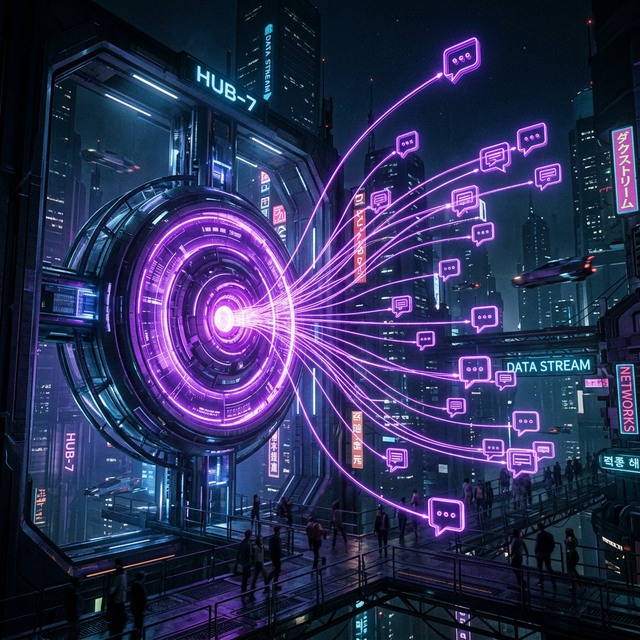
01The Fragmentation Problem
Current AI tools are siloed. You talk to one agent in a web browser, another in your IDE, and maybe a third in a dedicated mobile app. Your context is scattered across four different interfaces, and none of them talk to each other.
In the `serverlessclaw` philosophy, your AI agent should be ubiquitous. It shouldn't matter if you're on your laptop, your phone, or in a team chat—the agent is always one message away.
02The Unified Gateway
We built a **Unified Gateway** that normalizes signals from six different messaging platforms into a single "intent stream." Whether the trigger is a `/deploy` command from Telegram or a bug report from Slack, the core engine receives the same structured payload.
03iMessage & BlueBubbles Integration
One of our most requested "gold" features was the iMessage integration. By leveraging the BlueBubbles protocol, `serverlessclaw` can act as a native contact on your iPhone. You can text your agent to check server logs or deploy a patch while walking to lunch.
04Stateless Identity
The magic of the multi-channel approach is that your "identity" is maintained across all platforms via DynamoDB. The agent knows you're the same user whether you're DMing it on Discord or replying to a group thread in Teams.
In our next entry, **Surviving the Void**, we'll dive deep into the persistence layer that makes this cross-platform memory possible.