01The Orchestration Trap
When you run a single OpenClaw agent on your laptop, it's easy to manage. But when you're responsible for the infrastructure of hundreds of clients, you can't manually update every agent, monitor every state, or deploy every skill. You need a **Management Plane**.
02Introducing the Hub-and-Spoke
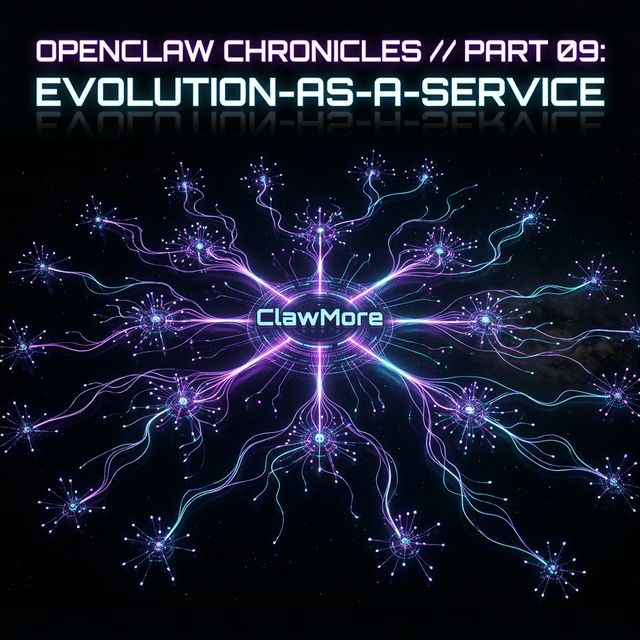
ClawMore's core architecture is built on the **Hub-and-Spoke** pattern. A central "Hub" account acts as the orchestrator, while each client project exists in an isolated "Spoke" account. This pattern ensures strict multi-tenancy while allowing for unified orchestration.
03Evolution-as-a-Service (EaaS)
By leveraging this architecture, ClawMore offers **EaaS**. The Hub account constantly scans the Spokes for inefficiencies, security gaps, or opportunities for cost optimization. When a "Mutation" is identified, it's pushed from the Hub to the Spokes safely.
Fleet Orchestration
Pushing security patches, new skills, or infrastructure updates to thousands of agents simultaneously.
Isolated Evolution
Each client's infrastructure evolves independently based on their unique usage patterns and needs.
04The Economics of Autonomy
EaaS is not just a technical breakthrough; it's an economic one. How do you price a service that autonomously improves itself? In our next entry, **The Mutation Tax**, we'll dive into the sustainable AI economics that power the ClawMore empire.